UK Online Casino Rules That Matter for Castle Casino Readers
 Available in GB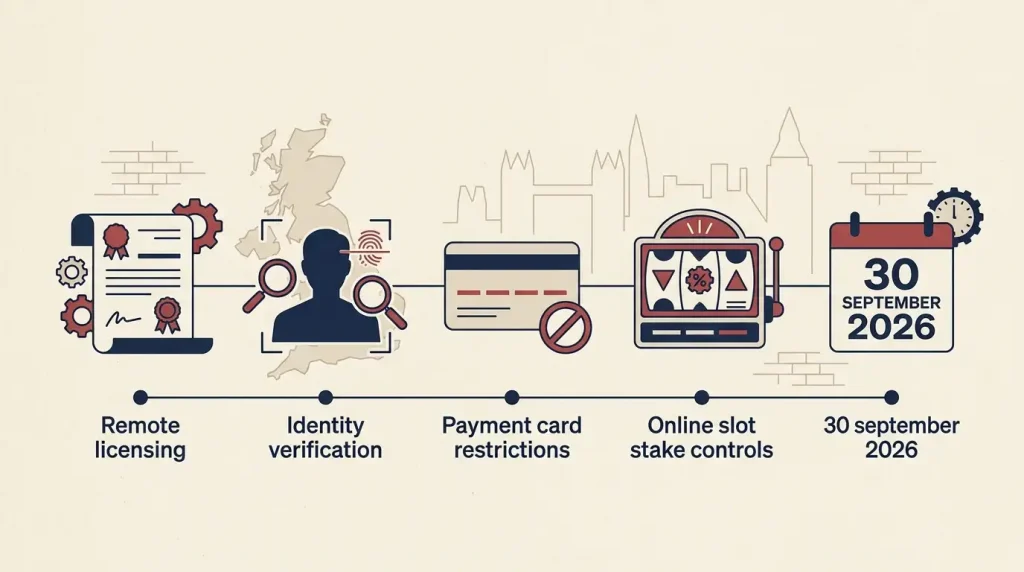
Several rules shape how online casinos can serve people in Great Britain. Operators need the relevant Gambling Commission licence, and licensed remote casinos cannot accept credit-card payments for gambling. Online slot stakes are limited to £2 per game cycle for adults aged 18 to 24 and £5 for those aged 25 or over. Operators must also verify a customer’s identity before allowing them to gamble. These requirements affect how players can register, deposit and use casino games.
Further requirements for gross deposit limits take effect on 30 September 2026. From that date, operators must offer this type of limit and use the term “deposit limit” for it. The rules described here apply to the regulated Great Britain market; they do not establish that Castle Casino meets them. No current UKGC licence or active UK-facing operation has been verified for the original Castle Casino.
Table of Contents
- UK online casino rules at a glance
- Check the remote casino licence
- Credit cards cannot be used for licensed remote gambling
- Online slot stakes are capped at £2 or £5
- Identity must be verified before gambling
- Self-exclusion is a licence obligation
- Financial vulnerability checks are now part of remote regulation
- The 30 September 2026 deposit-limit change is not yet in force
- Ordinary gambling winnings and UK tax
- Advertising rules add another layer
- How to use these rules when evaluating Castle Casino
- What the UK rules mean for Castle Casino
UK online casino rules at a glance
| Rule | Rule or requirement | Why it matters |
|---|---|---|
| Remote casino licence | Required to offer remote casino gambling to consumers in Great Britain. | Local licensing should be verified in the UKGC register. |
| Credit cards | Remote gambling licensees must not accept credit-card payments, including prohibited routing through money service businesses. | A card brand listed in an old review does not mean credit cards are permitted. |
| Online slot stakes | £2 maximum per game cycle for ages 18-24; £5 for age 25+. | The caps apply to online slots, not all casino products. |
| Identity verification | Required before a customer is permitted to gamble. | Information that could reasonably have been requested earlier should not be left until withdrawal. |
| Self-exclusion | Remote licensees must operate procedures and take reasonable steps to prevent excluded customers gambling. | It is a licence obligation, not an optional site feature. |
| Financial vulnerability checks | Light-touch checks apply to qualifying remote customers. | They form part of the current safer-gambling framework. |
| Gross deposit limits | New requirements take effect 30 September 2026. | These requirements take effect on 30 September 2026. |
These requirements apply to licensed operators serving Great Britain. They should not be taken as confirmation that Castle Casino holds a UKGC licence or follows the rules. The Castle Casino licence explains the brand’s historical licensing information and the available UKGC register findings.
Check the remote casino licence
A business providing online gambling facilities to consumers in Great Britain needs the appropriate Gambling Commission licence, even if the business is based overseas. An online casino that deals directly with players generally needs a remote casino operating licence. The licence relates to the activity being offered, not simply to the name displayed on a website.
The official register allows readers to check the business behind a casino and the activities it is licensed to provide. This is worth checking alongside any advertised games, bonuses or payment methods. A trading name may differ from the legal company name, particularly if a brand has changed hands or been relaunched.
Historical sources link the original Castle Casino to Castle Entertainment Limited and Costa Rica, while independent review sources list the casino as closed. No UKGC licence for Castle Casino was verified in the register check described here. The licensing requirements therefore provide context for UK readers, not confirmation of a currently licensed Castle Casino operation.
Credit cards cannot be used for licensed remote gambling
Licensed remote gambling operators in Great Britain cannot accept credit-card payments for gambling. The restriction also covers money service businesses where credit-card funds could reach a gambling account. Loading an e-wallet with a credit card does not provide a permitted way around the ban.
Castle Casino’s historical payment records mention Visa and MasterCard, but those names do not distinguish debit cards from credit cards. A licensed UK operator must comply with the credit-card restriction regardless of which card network it accepts. The Castle Casino payments page covers the former card and e-wallet options without presenting them as payment methods available today.
An older payment list may have been accurate when it was published without reflecting the rules or services available now. Castle Casino’s former payment options should be read as part of its operating history, not as guidance for making a deposit today.
Online slot stakes are capped at £2 or £5
Great Britain’s online slot stake limits are in force. Adults aged 18 to 24 are subject to a £2 maximum per game cycle, while the maximum for adults aged 25 and over is £5. The age-based limits apply to the stake on each online slot game cycle.
These caps apply specifically to online slots. They are not a general £5 limit on every type of casino bet: roulette and blackjack, for example, fall outside this particular slot-stake rule. Players comparing casino games should keep that distinction in mind.
The limits do not change Castle Casino’s historical game offering. They describe what licensed online slot products offered to Great Britain consumers must comply with. If a site using the Castle name claims to serve those consumers while offering higher slot stakes, its operator and licence details warrant checking.
Identity must be verified before gambling
UKGC licence conditions require remote operators to obtain and verify information establishing a customer’s identity before allowing that customer to gamble. This includes their name, address and date of birth, although other information may also be required. Identity checks are therefore part of opening and using a regulated gambling account.
An operator should not make a withdrawal conditional on information it could reasonably have requested earlier. Additional checks may still be necessary to meet other legal obligations, but routine identity verification should not be saved for the point at which a customer asks to withdraw their money.
These requirements do not establish which documents Castle Casino would request, how long checks would take or whether a particular document would be accepted. No current Castle-specific verification process has been established. The Castle Casino KYC explains the broader identity-check requirements.
Self-exclusion is a licence obligation
Licensed remote operators must provide self-exclusion procedures and take reasonable steps to prevent excluded customers from gambling. The social-responsibility code also requires action to stop marketing to those customers, close relevant accounts and return money held in them, subject to the applicable rules. Self-exclusion involves more than a setting displayed on an account page.
A visible self-exclusion button or footer link is only one part of the picture. Licensed operators must also have procedures that support the restriction in practice. A casino’s licence and the measures it applies both matter when considering its responsible-gambling arrangements.
The statutory gambling levy helps fund research, prevention and treatment related to gambling harm. It forms part of the wider Great Britain regulatory system and does not describe a service or feature offered by Castle Casino.
Financial vulnerability checks are now part of remote regulation
The Gambling Commission requires remote gambling businesses to carry out light-touch financial vulnerability checks when the relevant thresholds are met. These checks use publicly available information to identify signs of serious financial vulnerability, including bankruptcy or a history of unpaid debts. They are intended to help operators recognise customers who may be at greater risk of harm.
Financial vulnerability checks serve a different purpose from identity verification. KYC helps establish who a customer is; vulnerability checks look for certain indicators of financial difficulty. Both sit within the regulated customer-protection framework, but one does not replace the other.
These requirements describe the regulated market, not the procedures used by the original Castle Casino. There is no basis here for saying that its historical operation carried out the modern UK financial vulnerability checks.
The 30 September 2026 deposit-limit change is not yet in force
The Gambling Commission set 30 September 2026 as the implementation date for the new deposit-limit requirements. From that date, operators must offer gross deposit limits, reserve the term “deposit limit” for that definition and give those limits at least equal prominence to other types of financial limit.
A gross deposit limit measures the money a customer pays into their gambling account without subtracting withdrawals. The implementation date matters because the new terminology and presentation requirements apply from 30 September 2026, rather than before it.
Operators may still offer other controls, such as loss limits, stake limits or net deposit limits. Under the new framework, however, the unqualified term “deposit limit” refers to the gross deposit definition. This allows readers to distinguish the amount paid in from a net figure that takes withdrawals into account.
Ordinary gambling winnings and UK tax
HMRC’s published business-income guidance says that ordinary betting and gambling by a punter is not normally a trade. In that ordinary-player context, gambling profits are not normally taxable as trading income and gambling losses are not normally relieved.
This describes ordinary personal gambling rather than every possible tax situation. Professional, business-related or connected activities can raise different questions. The tax treatment of winnings is also separate from whether a casino holds the licence required to operate in Great Britain.
For ordinary players, HMRC’s guidance is the relevant starting point for understanding the treatment of gambling winnings and losses. Anyone whose circumstances fall outside ordinary personal gambling should consult the applicable tax guidance rather than rely on a casino’s general information page.
Advertising rules add another layer
UK gambling advertising is also constrained by the CAP Code. Section 16 contains rules intended to protect young and vulnerable people and restricts messaging that exploits financial concerns or suggests gambling is a solution to personal problems. These advertising standards sit alongside operator licensing requirements.
Castle Casino’s older promotions show what the brand advertised during its operating period. They do not establish which offers or messages would meet today’s advertising standards. Bonus terms, the placement of adverts and the audience they target all need to comply with the rules applicable to a current operator.
How to use these rules when evaluating Castle Casino
- Verify the operator and UKGC licence first. Do not infer a current licence from old branding or a foreign jurisdiction.
- Keep historical Castle features in context. Old games and payment lists can document the brand without proving current availability.
- Apply current product rules to any claimed live service. Slot stake limits, credit-card restrictions and identity verification are relevant to licensed Great Britain operations today.
- Check when new rules take effect. The new gross deposit-limit requirements take effect on 30 September 2026.
- Separate operator evidence from market rules. The existence of a UK rule does not prove Castle complies with it.
The regulations describe what licensed businesses are required to do. They do not confirm that a website using the Castle Casino name has an active licence or provides those protections. Readers should check the legal operator and its UKGC entry before treating the rules as safeguards attached to a particular service.
What the UK rules mean for Castle Casino
Castle Casino’s former games and payment methods are part of its history. Anyone assessing a site that now uses the name would also need to identify the operating company, confirm its UKGC licence and check that the service falls within the relevant Great Britain rules. Historical brand information alone cannot establish those details.
In Great Britain, remote casino licensing, the credit-card ban, age-based online slot stake limits, identity checks, self-exclusion and financial vulnerability checks all form part of the regulated system. The new gross deposit-limit requirements take effect on 30 September 2026. No current Castle Casino operation has been independently linked to a verified UKGC licence here, so these requirements should not be mistaken for evidence that the original brand currently complies with them.
For related information, see Castle Casino UK review.